Search our FAQ
Sort By
What angle is best for solar panels?
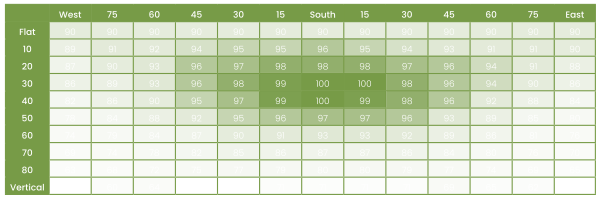
Solar PV systems generate electricity from all the light that hits their surface. While most electricity comes from direct sunlight, diffuse light from the sky and reflected light (albedo) also contribute significantly. The impact of direct sunlight depends on orientation, but diffuse and reflected light generate power regardless of the angle. For maximum efficiency, solar panels should ideally face due south at a 30-degree angle. However, thanks to the diffuse light contribution, a wide range of orientations still achieve high performance. Roofs oriented between southwest and southeast with a pitch of 10 to 50 degrees can produce about 95% of the optimal output. East or west-facing arrays typically generate around 85% of the maximum possible energy. Therefore, while south-facing orientations are ideal, nearly any roof can generate a substantial amount of electricity.
How do I get started with solar power?
Getting started with solar power is easy with LCS Energy. Contact us for a free consultation and site assessment. Our team will design a customized solar solution tailored to your energy needs and guide you through the installation process.
Are there any incentives for installing solar panels?
There are various incentives and rebates available for installing solar panels, including government grants, tax credits, and feed-in tariffs. LCS Energy can help you navigate these incentives to maximize your savings.
Can I sell excess solar energy back to the grid?
Yes, with LCS Energy, you can sell excess solar energy back to the grid through a process called net metering. This allows you to receive credits on your electricity bill for the surplus energy your system generates.
Is my roof suitable for solar panels?
The suitability of your roof for solar panels depends on several factors, including its size, orientation, and shading. LCS Energy provides a free site assessment to determine if your roof is ideal for a solar installation.
What happens to my solar power system if there is a power outage?
During a power outage, standard grid-tied solar power systems from LCS Energy will shut down to prevent backfeeding electricity into the grid, which can be dangerous for utility workers. However, with a solar battery storage system from LCS Energy, you can have backup power during outages.
Can I use solar power if I live in a cloudy or rainy area?
Yes, solar panels from LCS Energy can still generate electricity on cloudy or rainy days, though their efficiency may be reduced. Advances in solar technology have made panels more efficient, even in less-than-ideal weather conditions.
How long do solar panels last?
Solar panels from LCS Energy are designed to last for 25-30 years or more. They come with warranties that guarantee their performance and durability over this period.
What maintenance do solar panels require?
Solar panels from LCS Energy require minimal maintenance. Regular cleaning to remove dirt and debris and occasional inspections to ensure optimal performance are typically all that is needed. We offer maintenance services to keep your system running smoothly.
How much can I save with solar power?
With LCS Energy, your savings with solar power will vary based on your energy consumption, the size of your solar system, and local electricity rates. On average, homeowners can save thousands of pounds over the lifespan of the system.
How much does a solar power system cost?
The cost of a solar power system from LCS Energy depends on various factors, including the size of the system, your location, and your energy needs. We offer customized quotes and financing options to make solar power accessible and affordable.
Why should I choose solar power?
Choosing solar power with LCS Energy means opting for a sustainable and environmentally friendly energy source that reduces carbon emissions. It can lower your electricity bills, increase your property value, and provide energy independence.
How do solar panels work?
Solar panels, provided by LCS Energy, contain photovoltaic (PV) cells that absorb sunlight and generate direct current (DC) electricity. This DC electricity is then converted to alternating current (AC) electricity by an inverter, which can be used to power your home or business.
What is solar energy?
At LCS Energy, we define solar energy as the cleanest and most abundant renewable energy source available. It harnesses energy from the sun’s rays and converts it into electricity using solar panels.
Ask a question